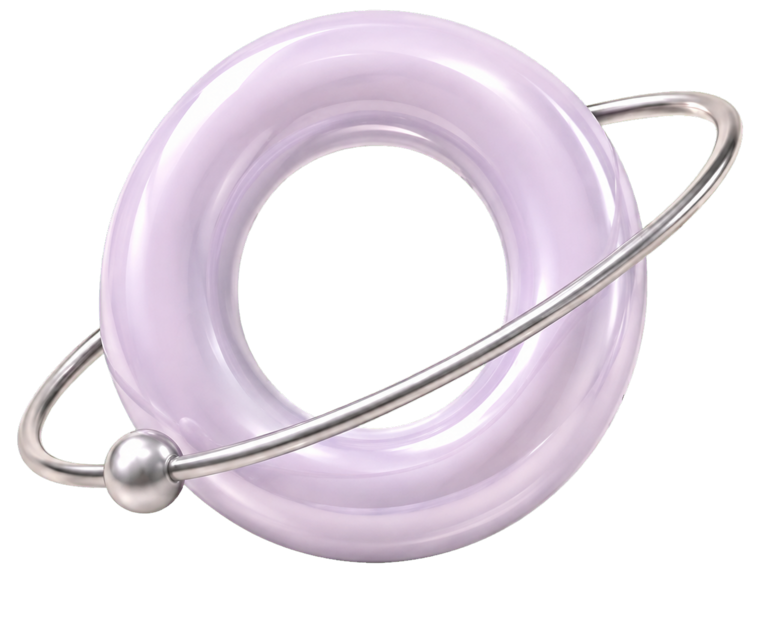
Orbit
People moving independently while remaining part of a shared world.
Invitations · group identity Join early access
Roundup mathematical material library
Roundup's objects begin with a social idea, borrow a mathematical structure, then become something you can almost imagine holding: pearl gel, iridescent acrylic, chrome and glass.
These are not random stickers and they are not literal diagrams. Each object has a meaning, a material role and a place it belongs.
The core collection
This is the universal set: recognisable pieces that can move between the website, app, invitations and future Worlds.
People moving independently while remaining part of a shared world.
Invitations · group identity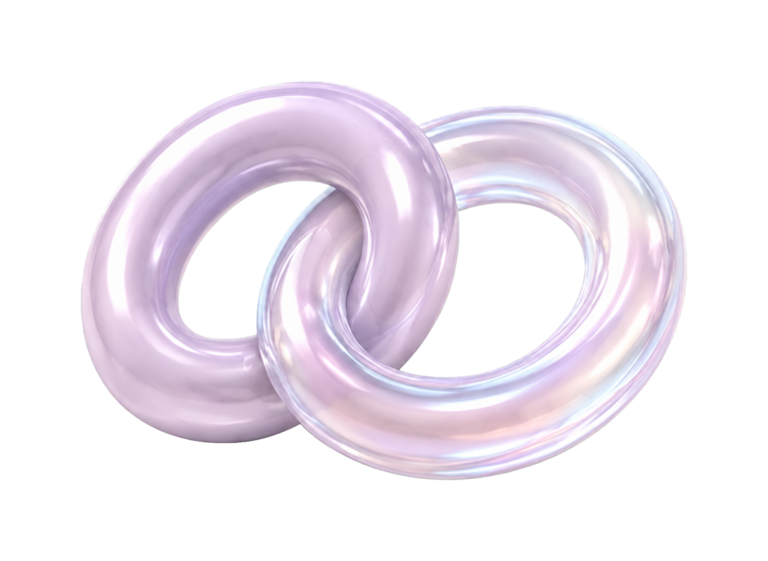
The shared space where different schedules and preferences can meet.
Availability · decisions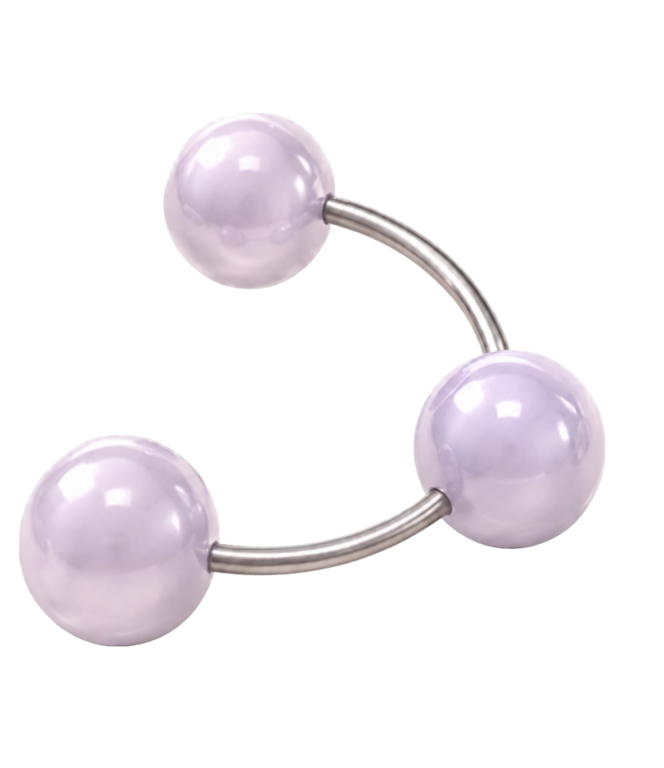
Individual inputs becoming a clearer picture without disappearing into the group.
Preferences · group input
A relationship with history, complexity and enough flexibility to keep moving.
Continuity · long-term vision
Energy changes. A plan can move with the group rather than force one tempo.
Social energy · invitations
The small first impulse: someone imagines a plan and decides to begin.
Create · initiationShared possibility
Set theory gives us a way to picture people who remain fully themselves while making a shared plan possible.

The part of several sets that can become one workable plan.
A shared centre protected by space for individual needs.
Scattered points moving toward a temporary formation.
Overlap that does not require everyone to be identical.
Relationships through time
Loops, knots and changing orbits let us show friendship as something rhythmic: people leave, return, adjust and meet again.

A path with no obvious beginning or final endpoint.
Different rhythms finding a moment of shared timing.
Complexity resolving without pretending the history was simple.
Repeated connection without a streak, score or obligation.
Paradox & rearrangement
Banach–Tarski and impossible geometry inspire this family poetically. The objects are metaphors for re-seeing what is available—not literal claims about time or people.

One familiar whole opened into unexpected pieces.
Related fragments becoming more than one possible form.
A route that changes how beginning and ending are understood.
Scattered parts resolving into one coherent temporary whole.
The no-random-sticker rules
Usually one object per composition; two only when they are in dialogue.
Never cover a face, headline, button, app control or meaningful photo detail.
Use physical motion—tilt, orbit, settle or changing light—not restless floating.
Keep the base experience calm; the material world is an expressive accent.
The library will keep growing
Future audience pages and World Packs can reinterpret these forms in new materials without becoming separate brands.